The Compliance Challenge Nigerian Exporters Can’t Afford to Ignore: Key Findings from the Sunbeth Whitepaper

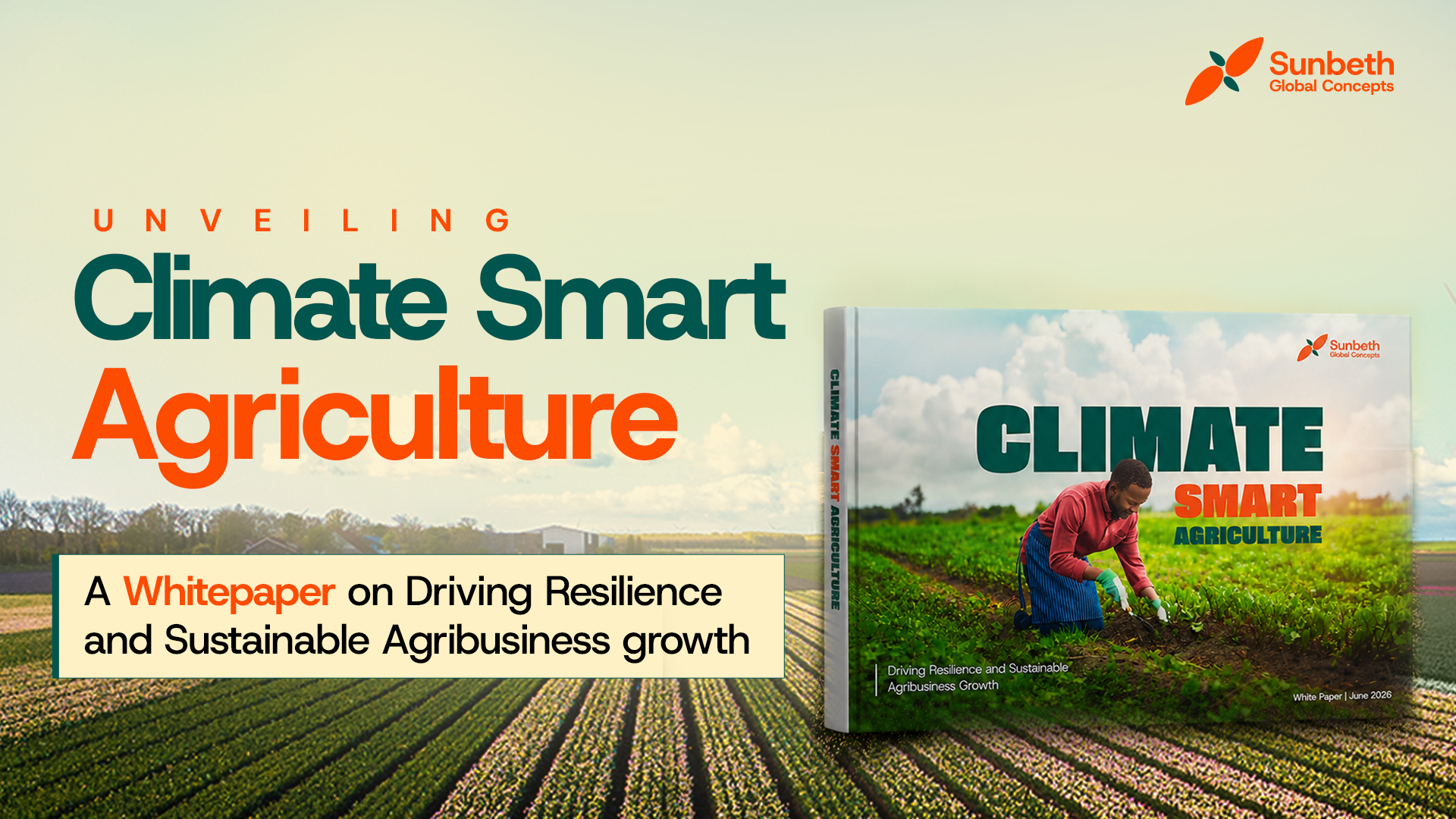
Sunbeth Global Concepts (SGC) has released a new whitepaper warning that African agribusinesses face a growing and largely unrecognised commercial threat: the compliance gap. The report, Climate-Smart Agriculture: Driving Resilience and Sustainable Agribusiness Growth, argues that sustainability compliance, traceability, and measurable climate resilience have shifted from optional considerations to hard requirements for access to global agro-commodity markets. Many Nigerian agribusinesses, the report finds, are already losing contracts as a result and have yet to identify the underlying cause.
The whitepaper notes that when international buyers source cocoa, cashew, sesame, and other agro-commodities from West Africa today, they are no longer evaluating product quality alone. Traceability records, sustainability data, and evidence of climate-resilient sourcing have become standard procurement requirements, particularly in Europe and North America. Businesses that cannot meet these requirements are being passed over, often without direct communication from buyers.
Speaking on the report, Olasunkanmi Owoyemi, Chief Executive Officer of Sunbeth Global Concepts, said the commercial landscape for African agro-commodity exporters has fundamentally changed.
“For decades, agricultural competitiveness was driven by yield, pricing, and trade relationships. Today, buyers are demanding proof, proof of traceability, proof of sustainability, and proof that supply chains can withstand climate pressure. A buyer reduces volumes, a contract is not renewed, or financing becomes harder to secure. In many cases, the issue is no longer product quality alone, but compliance and resilience expectations that are now embedded in global trade,” he said.
Sunbeth said it has embedded climate resilience directly into its operations as proof of concept for what this infrastructure looks like in practice. The company meets GPS-mapped over 22,000 smallholder farmers across eight Nigerian states, trained more than 6,000 farmers in climate-smart agricultural practices in Ondo State, and deployed traceability systems across its supply chain that meet international verification requirements. These systems support over 30,000 livelihoods and are aligned with evolving global export standards.
A central framework in the whitepaper is Orange Cocoa, Sunbeth’s proprietary model for sustainable cocoa sourcing that integrates farmer productivity, welfare, and environmental responsibility under a “Better Cocoa, Better Life, Better Planet” approach. The model is presented as a replicable structure for agribusinesses seeking to align field-level operations with global procurement requirements.
The report concludes that while the compliance gap remains closable, delayed action will narrow that window. Agribusinesses that begin investing in farmer mapping, traceability, and climate-resilient sourcing structures now will be positioned when the next wave of market requirements arrives. Those that do not risk being quietly excluded from the markets they already serve.
The whitepaper is available for download at http://www.sunbeth.net/