Beyond the Marketplace: How Nestlé Nigeria Is Empowering Women and Strengthening Livelihoods – By John Kokome

In Nigeria, where women play critical roles in agriculture, retail, food production and household welfare, economic empowerment requires more than access to finance. It demands practical business skills, mentorship, access to markets and the resources to transform small enterprises into sustainable sources of income.
Recognising this reality, Nestlé Nigeria Plc has continued to invest in initiatives aimed at strengthening women’s economic participation, improving livelihoods and creating opportunities across the country’s food and beverage value chain.
Between 2025 and 2026, the company’s women-focused interventions demonstrated how private-sector investment, when combined with targeted capacity development and practical business support, can contribute to building more resilient female-led enterprises.
At the centre of these efforts are its Empowering Rural Women in Nigeria initiative, Nestlé Professional’s Business of Food programme and agricultural partnerships supporting smallholder farmers.
Empowering rural women, one business at a time
Launched in 2021, Nestlé’s Empowering Rural Women in Nigeria initiative targets female retailers in underserved communities who often possess the determination to grow their businesses but lack adequate training, business resources and structured mentorship.
The programme combines entrepreneurship training, product grants and mentorship to help participants improve their business operations and earning potential.
In July 2025, Nestlé Nigeria expanded the initiative to Agbara, Ogun State, welcoming 49 women retailers into the programme. According to the company, this brought the cumulative number of beneficiaries to 431 women. Participants received product grants valued at ₦200,000 each, alongside training in bookkeeping, merchandising, entrepreneurship and customer service. They were also assigned mentors for three months to support the practical application of their newly acquired knowledge.
The company reported that more than 85 per cent of previous participants had sustained business expansion, with some businesses growing by as much as threefold.
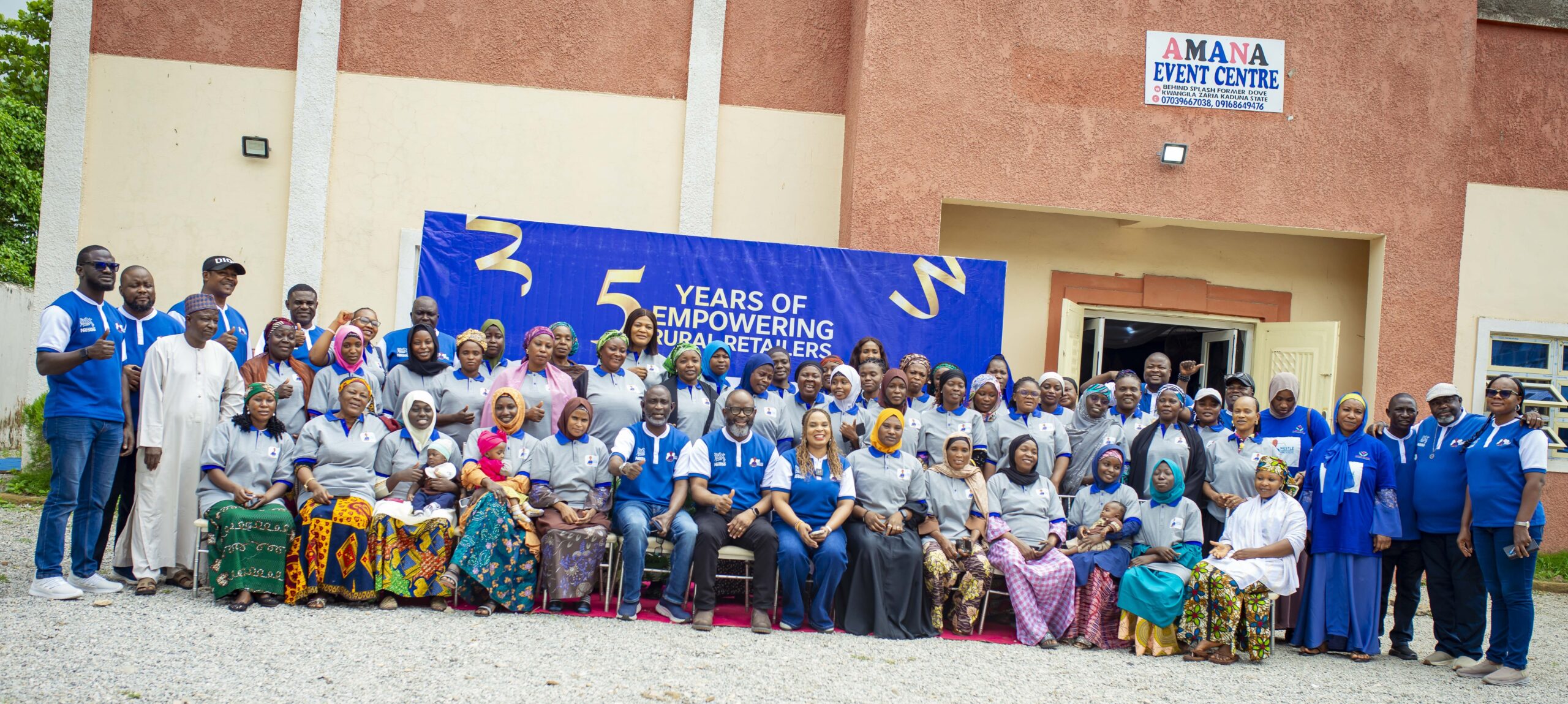
The initiative recorded another milestone in August 2026 when Nestlé welcomed 50 women retailers in Zaria, Kaduna State, for its tenth edition and fifth anniversary. This brought the reported cumulative number of beneficiaries to 482 women entrepreneurs.
The Zaria participants received practical business training and product grants equivalent to three times their existing stock, alongside a further three-month mentorship programme. Nestlé also reported that more than 80 per cent of participants from previous cohorts had sustained and grown their businesses beyond the initial support.
These interventions highlight the importance of combining financial and material assistance with knowledge and mentorship. Rather than simply distributing resources, the programme seeks to equip women with the capabilities to manage, sustain and expand their businesses.
Building women-led businesses in the food industry
Beyond rural retail, Nestlé Nigeria is supporting women operating in the country’s food-service and hospitality sectors through Nestlé Professional’s Business of Food initiative.
In March 2025, the company organised the tenth edition of its Business of Food workshop in Benin City, Edo State, as part of activities marking International Women’s Day. The event attracted more than 200 female participants, including restaurant operators, chefs, caterers, street-food vendors, culinary students and grillers.
Participants received practical training in culinary techniques, menu development, customer engagement and food hygiene. The workshop also provided opportunities for networking, professional development and knowledge-sharing with established industry practitioners.
According to Nestlé Nigeria, the broader Business of Food initiative had equipped more than 2,000 food businesses across the country over the preceding three years.
For women operating small catering businesses, restaurants and informal food outlets, these skills can make a significant difference. Improved menu planning, hygiene standards, customer service and business management can strengthen operational efficiency, improve customer confidence and create opportunities for business growth.
More importantly, the initiative recognises the economic contribution of women within Nigeria’s informal food economy, where many entrepreneurs operate with limited access to structured training and business development opportunities.
Opening opportunities in agriculture
Nestlé’s women empowerment efforts also extend to agriculture, an important sector for women’s livelihoods and Nigeria’s food security.
In May 2025, Nestlé Nigeria, AGRA and TechnoServe highlighted their Strengthening Farmers’ and SMEs’ Resilience through Climate Smart Grain Production and Accessing Structured Markets (StreFaS) initiative.
The three-year programme, running until October 2027, aims to support 25,000 smallholder farmers and eight aggregators across Kaduna and Nasarawa States, with an investment exceeding US$1 million.
It promotes climate-smart production of maize, soybean, rice and sorghum, alongside regenerative agricultural practices and improved access to structured markets. Women are among its priority beneficiary groups.
By connecting farmers to more organised markets and strengthening agricultural production systems, the programme seeks to improve the commercial prospects of smallholder farming.
Although the overall target of 25,000 farmers is significant, publicly reported figures do not yet establish the specific number of women benefiting. Greater sex-disaggregated reporting would therefore provide a clearer picture of the initiative’s direct contribution to women’s economic empowerment.
Measuring impact beyond participation
The broader significance of Nestlé Nigeria’s interventions lies in their potential to generate benefits beyond individual beneficiaries.
A woman whose retail business becomes more sustainable may improve her household’s financial security, create employment opportunities and serve more customers. Similarly, a better-equipped food entrepreneur can strengthen local food services while building a more dependable source of income.
Nestlé Nigeria’s 2026 reporting that women account for approximately 60 per cent of its retail network further underscores their importance to its commercial ecosystem.
However, the true measure of empowerment should go beyond the number of women trained or the value of grants distributed. Sustained progress must also be assessed through improvements in business revenue, profitability, enterprise survival, employment generation and access to finance.
Independent assessments and transparent reporting would strengthen the evidence of long-term impact and demonstrate how effectively these interventions translate into lasting economic independence.
Building a more inclusive economy
Nestlé Nigeria’s women-focused initiatives in 2025 and 2026 demonstrate a practical approach to private-sector empowerment: equip women with relevant skills, provide resources they can deploy immediately and offer mentorship to help them build stronger businesses.
The reported milestone of 482 rural women reached by August 2026, alongside the more than 200 female food-industry participants at its 2025 Benin workshop, reflects the company’s engagement across different segments of the economy.
The next challenge is to deepen these gains, expand access to underserved communities and strengthen the measurement of long-term outcomes.
Ultimately, empowering women should not be measured solely by participation figures or the value of products distributed. Its real measure is whether women acquire the capacity, resources and opportunities to sustain their businesses, make independent economic decisions and build more secure futures.
Nestlé Nigeria’s interventions provide a foundation for that ambition. Their lasting legacy will depend on how effectively initial support translates into enduring economic independence and a more inclusive Nigerian economy.